
Car Insurance Laws California Drivers Should Know
Free to compare
California's Financial Responsibility Law Applies to Your Policy Structure
You own three vehicles, each titled to a different household member, and you are trying to determine whether California law requires one shared policy or allows separate policies per car. The state's financial-responsibility statute does not mandate a single policy for all household vehicles, but it does require every vehicle to carry proof of financial responsibility at all times, and the way you structure your policies changes how you satisfy that requirement.
California Vehicle Code Section 16020 requires every driver to carry proof of financial responsibility. That proof can be an insurance policy, a cash deposit with the DMV, a surety bond, or a self-insurance certificate. For most households, the insurance policy is the only practical option. The law does not specify whether multiple vehicles must sit on one policy or can occupy separate policies, but it does require that every vehicle be covered continuously from the moment it is registered.
“A lapse on one vehicle's policy suspends that vehicle's registration immediately, even if your other household vehicles remain insured.”

Check Your Rate Against Other California Drivers
Get My California Car Insurance Quote$30,000/$60,000/$15,000
California Minimum Liability Limits
California requires $30,000 bodily injury per person, $60,000 bodily injury per accident, and $15,000 property damage. These minimums apply to every vehicle you own, whether on one policy or several.
California Vehicle Code Section 16056
What Proof of Financial Responsibility Means for Multi-Vehicle Households
Proof of financial responsibility is not the same as proof of insurance. Financial responsibility is the broader legal obligation; insurance is one way to satisfy it. When you register a vehicle in California, the DMV verifies that the vehicle is covered by a policy meeting the state's minimum liability limits. That verification happens at registration, at renewal, and whenever law enforcement requests proof during a traffic stop.
For a household with multiple vehicles, each car must independently satisfy the financial-responsibility requirement. If you place all vehicles on one policy, that policy serves as proof for every car. If you split vehicles across separate policies, each policy must meet the state minimums independently. The DMV does not track whether your household has one policy or five; it tracks whether each registered vehicle has continuous coverage.
The structural consequence: a lapse on one policy does not affect the other policies in your household, but it does trigger an immediate suspension for the vehicle on the lapsed policy.
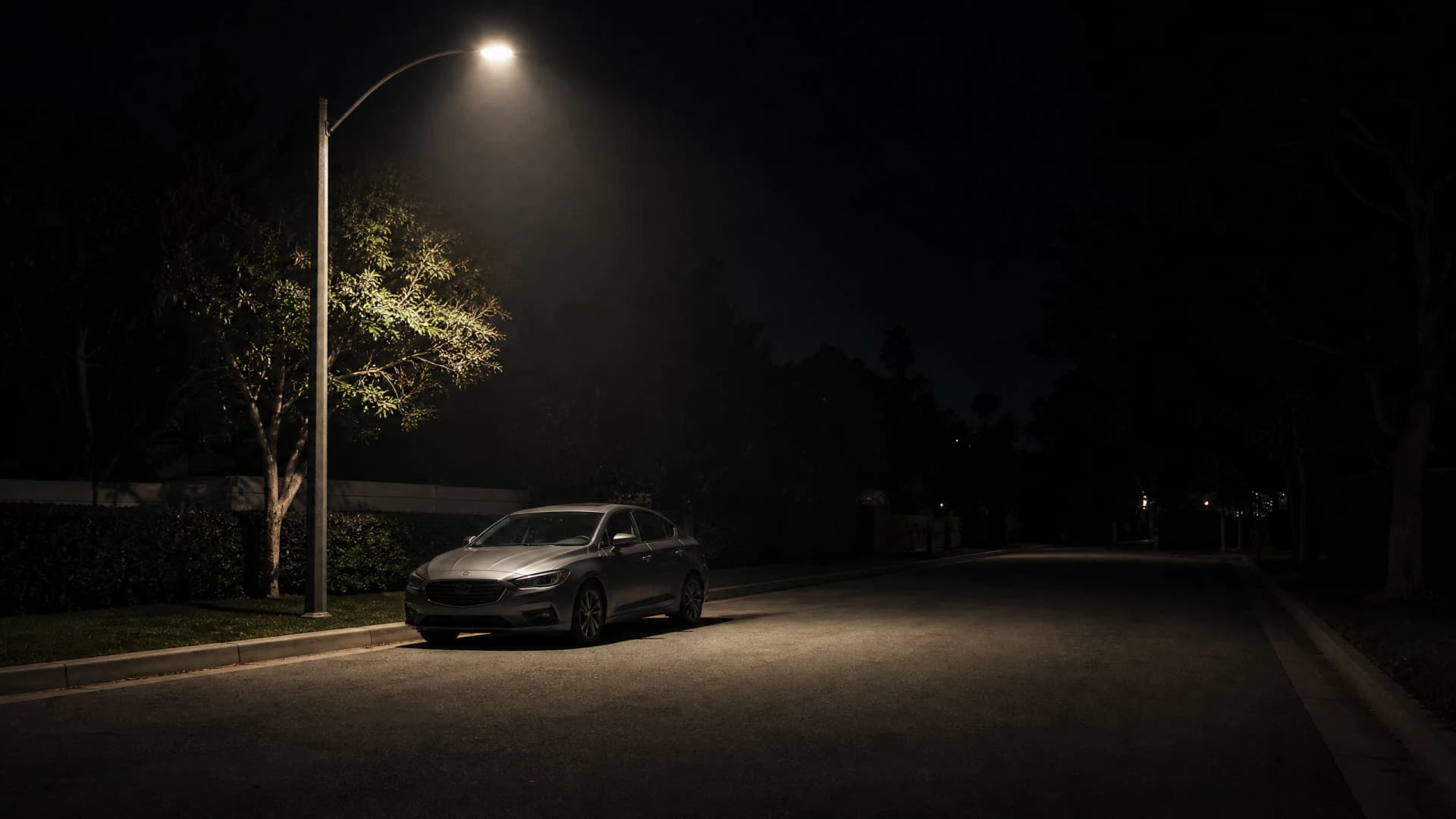
A lapse on one vehicle's policy suspends that vehicle's registration immediately, even if your other household vehicles remain insured on separate policies.





Registration Grace Periods and Adding Vehicles Mid-Term
California gives you 20 days from the date of purchase to register a newly-acquired vehicle. During those 20 days, your existing policy typically extends coverage to the new vehicle automatically, but only if you notify your carrier within a specified window. Most carriers require notification within 14 to 30 days of purchase; if you miss that window, the new vehicle is not covered, even if it is still within the state's 20-day registration grace period.
The failure mode: you buy a second car on day 1, register it with DMV on day 18, and notify your carrier on day 25. The DMV accepts your registration because you are within the 20-day window. Your carrier denies coverage because you missed the 14-day notification deadline. The vehicle is now registered but uninsured, and California DMV will suspend the registration as soon as the coverage gap is detected.
To avoid this, notify your carrier the same day you purchase the vehicle, before you drive it off the lot. Do not wait until registration. The carrier adds the vehicle to your policy immediately, and you have 20 days to complete DMV registration without any coverage gap.
20.4%
California Uninsured Motorist Rate
One in five California drivers operates without insurance. Uninsured-motorist coverage protects you when an at-fault driver cannot pay for damages, and it applies to every vehicle on the policy that carries it.
Insurance Information Institute, 2023

How Multi-Car Discounts Interact with California's Coverage Requirements
The multi-car discount applies when you insure two or more vehicles on the same policy. California law does not regulate the discount itself; carriers set their own discount structures. Most carriers require that all vehicles on the policy be garaged at the same address and that all listed drivers have access to all vehicles. If you own three cars but garage one at a second address, that vehicle may not qualify for the same-policy discount, and some carriers will require it to sit on a separate policy.
The discount does not change your legal obligation to meet the state's minimum liability limits on every vehicle. Whether you combine three vehicles on one policy or split them across three policies, each car must carry $30,000/$60,000/$15,000 liability minimums. The discount affects your premium, not your compliance with state law.
Compare Carriers That Write Multi-Vehicle Policies in California
California has 27 carriers writing multi-vehicle policies, and each structures its multi-car discount, uninsured-motorist offering, and mid-term vehicle-addition rules differently. Geico, Progressive, State Farm, and Farmers all write multi-vehicle policies statewide and offer online quoting. Mercury General and CSAA are California-headquartered carriers with strong multi-car programs. Bristol West, Dairyland, Infinity, and Kemper specialize in non-standard and high-risk multi-vehicle households.
When comparing carriers, confirm that the quote reflects every vehicle you own and that each vehicle meets California's minimum liability limits. Verify the carrier's notification window for adding vehicles mid-term, and confirm whether the multi-car discount requires all vehicles to be garaged at the same address. Request a written summary of your uninsured-motorist acceptance or rejection for each policy you hold.
How California's Uninsured-Motorist Coverage Rule Affects Policy Structure
California Insurance Code Section 11580.2 requires every carrier to offer uninsured-motorist coverage at limits equal to your liability limits, and you must reject it in writing if you do not want it. That rejection is binding for the entire policy. If you have three vehicles on one policy and reject uninsured-motorist coverage, the rejection applies to all three cars. If you split those vehicles across three separate policies, you make the acceptance-or-rejection decision three times, once per policy.
This creates a structural decision point for multi-vehicle households. Combining all vehicles on one policy means one uninsured-motorist decision governs every car. Splitting vehicles across policies allows you to accept uninsured-motorist coverage on one policy and reject it on another, but it also means managing three separate acceptance forms and three separate premium structures. Most households find that the administrative overhead of separate policies outweighs the flexibility of per-policy uninsured-motorist choices.
Get Your Free Quote
Get My California Car Insurance QuoteFrequently Asked Questions
Does California require all household vehicles to be on one insurance policy?
No. California requires every vehicle to carry proof of financial responsibility meeting the state's minimum liability limits, but the law does not mandate that all household vehicles sit on one policy. You can insure vehicles on separate policies as long as each policy meets the $30,000/$60,000/$15,000 minimums.
What happens if one vehicle in my household loses insurance coverage?
California DMV suspends the registration for that specific vehicle immediately. The suspension does not affect other vehicles in your household that remain insured on separate policies.
How long do I have to add a newly-purchased vehicle to my California insurance policy?
Most carriers require notification within 14 to 30 days of purchase. California gives you 20 days to register the vehicle with DMV, but your carrier's notification deadline is often shorter. Notify your carrier the same day you purchase the vehicle to avoid a coverage gap.
Is uninsured motorist coverage required in California?
No, but carriers must offer it at limits equal to your liability limits, and you must reject it in writing if you do not want it. The acceptance or rejection applies to the entire policy, so all vehicles on that policy are governed by the same decision.
Can I reject uninsured motorist coverage on one vehicle but accept it on another?
Only if the vehicles are on separate policies. Uninsured-motorist acceptance or rejection applies per policy, not per vehicle. If all vehicles are on one policy, one decision governs all cars.
Do all vehicles on a multi-car policy need to be garaged at the same address?
Most carriers require it for the multi-car discount to apply. If you garage one vehicle at a second address, that vehicle may not qualify for the same-policy discount, and some carriers will require it to sit on a separate policy.