
Gap Insurance Is Not Required in California
California does not require gap insurance. Gap insurance is optional coverage that pays the difference between what you owe on a financed vehicle and what your insurer pays if the car is totaled.
Your lender may require gap insurance as a condition of the loan, but that is a financing requirement, not a state insurance mandate. Many households with multiple financed vehicles face this confusion when adding a second or third car—each lender may push gap coverage separately, and the cumulative premium can add up quickly without a clear understanding of whether the protection is necessary.
Compare car insurance rates in your state
Get quotes from licensed carriers — no obligation, no spam, results in minutes.
Get Your Free QuoteCalifornia Minimum Liability Limits
These minimums do not include collision, comprehensive, or gap coverage—those are optional unless your lender requires them.
California Department of Insurance
What Gap Insurance Actually Covers
Gap insurance covers the difference between your car's actual cash value at the time of a total loss and the remaining balance on your loan or lease.
Gap coverage applies only when your primary collision or comprehensive insurance has already paid out. It does not cover deductibles, overdue loan payments, lease penalties, or extended warranties rolled into the loan. It is not a substitute for collision or comprehensive coverage—it is a supplement that activates only when those coverages leave a shortfall.
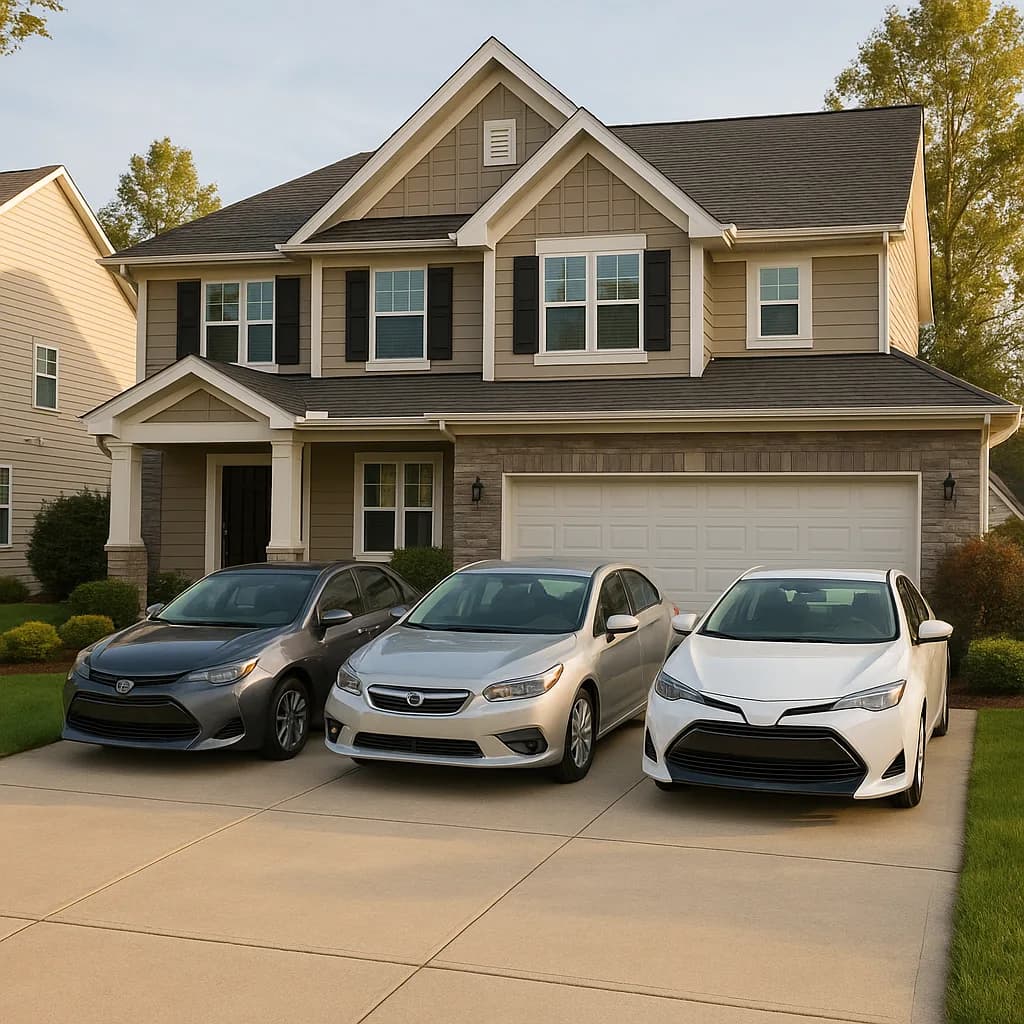
For households insuring multiple financed vehicles, gap insurance is typically sold per vehicle. If you finance three cars and add gap coverage to all three, you pay three separate gap premiums. Some lenders bundle gap insurance into the loan at the time of purchase; others require you to add it to your auto policy. The cost and structure vary, and the cumulative expense across multiple vehicles can be substantial.
Gap insurance only pays when your car is totaled and you owe more than the insurer's payout—if your loan balance is lower than the car's value, gap coverage provides no benefit.
When Gap Insurance Makes Sense for Multiple Financed Vehicles

A vehicle depreciates fastest in the first 12 to 24 months. If you financed the full purchase price with little or no down payment, you are likely underwater—owing more than the car is worth—during that window. Gap insurance protects you if the car is totaled while the loan balance exceeds the vehicle's depreciated value. After two years, most borrowers with standard loan terms owe less than the car's value, and gap coverage becomes redundant.
For a household financing multiple vehicles, evaluate each car separately. A used car with a three-year loan and a 20 percent down payment may never be underwater. Adding gap insurance to every financed vehicle without checking loan-to-value ratios wastes premium dollars. Compare your current loan balance to your insurer's stated actual cash value for each car—if the balance is lower, gap coverage provides no protection.
Related Articles



How Gap Insurance Works Across a Multi-Car Policy
Gap insurance is added per vehicle, not per policy. If you insure three financed cars on one multi-car policy, you can add gap coverage to all three, to one, or to none. Each vehicle with gap coverage carries its own gap premium, typically added to the policy's total cost at renewal or when the vehicle is added.
Some carriers offer gap coverage as an endorsement on your auto policy; others require you to purchase it through the lender or a third-party provider at the time of financing. Lender-sold gap insurance is often rolled into the loan balance, which means you pay interest on the gap premium over the life of the loan. Carrier-sold gap coverage is paid as part of your regular auto premium and can be canceled when the loan balance drops below the car's value.
When you add a financed vehicle to an existing multi-car policy, your carrier will ask whether you want gap coverage for that vehicle. If you decline and your lender requires it, the lender will place force-placed gap insurance on the loan, which is typically more expensive than carrier-sold coverage. Check your loan agreement before declining—most lenders state the gap requirement in the financing contract.
California Uninsured Motorist Rate
20.4%
One in five California drivers is uninsured. If an uninsured driver totals your financed vehicle, your collision coverage pays the depreciated value, and gap insurance covers the shortfall—but only if you carry collision coverage in the first place.
Insurance Research Council, 2023
Alternatives to Gap Insurance for Financed Vehicles
A larger down payment reduces or eliminates the gap between loan balance and vehicle value. If you put 20 percent down on a new car, you are less likely to owe more than the car is worth after the first year. For households financing multiple vehicles, structuring loans with higher down payments can eliminate the need for gap coverage entirely.
Some carriers offer new car replacement coverage, which pays to replace a totaled vehicle with a new one of the same make and model if the loss occurs within the first year or two of ownership. This coverage is broader than gap insurance—it does not require a loan, and it pays for a new car rather than just covering the loan shortfall. New car replacement is typically more expensive than gap coverage and is not available on used vehicles.
Compare Carriers That Write Multi-Vehicle Policies in California
Not all carriers offer gap insurance as a policy endorsement. Geico, Progressive, State Farm, and Nationwide sell gap coverage directly on auto policies in California. Allstate and Farmers offer gap coverage in some states but may refer California customers to third-party providers. If you finance multiple vehicles and want gap coverage managed through your auto policy rather than through separate lender contracts, confirm that your carrier writes gap endorsements before binding the policy.
When comparing carriers for a multi-car policy with financed vehicles, ask whether gap coverage is available as an endorsement, how much it costs per vehicle, and whether it can be canceled mid-term once your loan balance drops below the car's value. Lender-sold gap insurance typically cannot be canceled or refunded, even if you pay off the loan early. Carrier-sold gap coverage can usually be removed at any time, and you receive a prorated refund for the unused portion.